
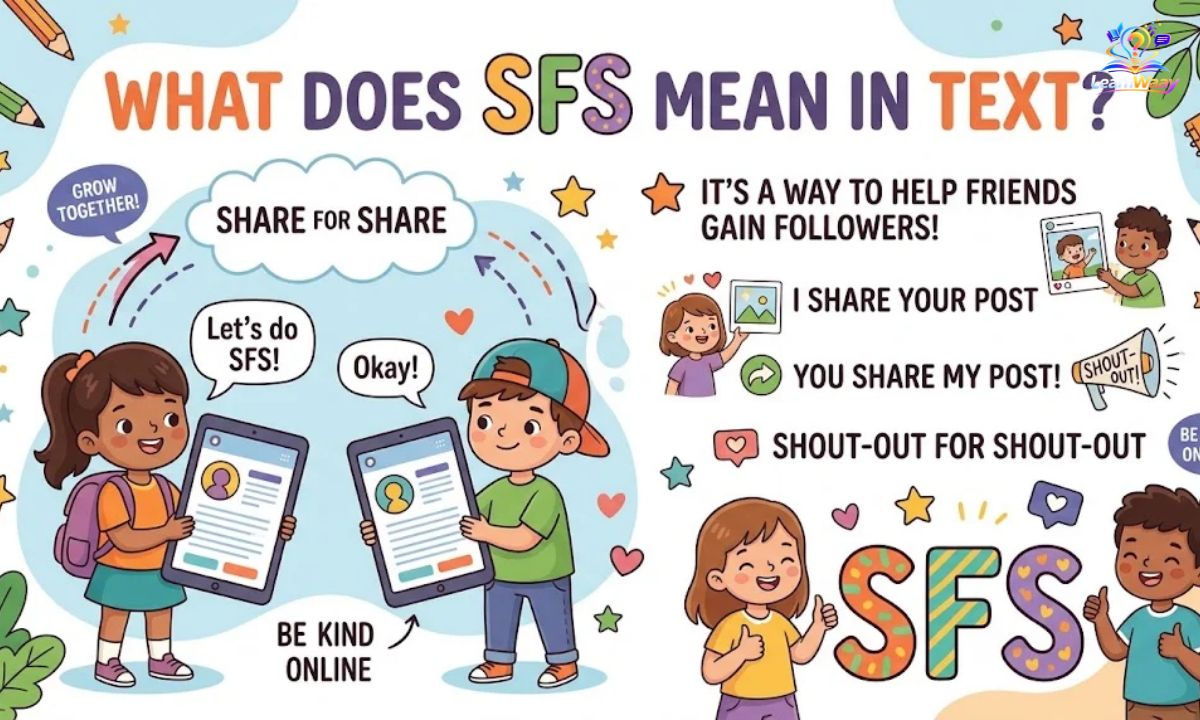

If someone sends you “SFS?” and you have no idea what it means, you are not alone. In text messages and on social media, SFS most often means “shoutout for shoutout”: you promote my account, and I promote yours in return. It is a popular way for users to support each other, reach new audiences, and gain more visibility online. If you are wondering what does sfs mean in text, understanding the context of the conversation can help you figure out exactly what the sender wants.
This guide explains what SFS stands for, where it is commonly used, the other meanings you may encounter, and how to respond without any awkwardness. You will also learn how people use SFS on platforms like Instagram, Snapchat, and TikTok, along with simple examples to help you recognize it in real conversations. By the end, you will know how to understand SFS and when it makes sense to use it yourself.
What Does SFS Mean in Text & Chat?
In text and chat, SFS stands for “shoutout for shoutout.” It is an offer or request to trade public promotion. One person mentions, tags, or shares the other person’s account, and the other person does the same in return.
The core idea is a fair swap. Nobody pays anyone. Both accounts hope to reach each other’s followers and grow their audience.
It is most common on Instagram, Snapchat, and TikTok, and it is mainly used by teens, young adults, and small creators.
Full Form, Stands For & Short Meaning of SFS
Here is the quick answer, plus the other social-media meanings people use.
| Abbreviation | Full form | Short meaning |
| SFS (most common) | Shoutout for shoutout | Trade promotions between two accounts |
| SFS | Spam for spam | Trade Snapchat story views or messages (usually among friends) |
| SFS | Smile for smile | Exchange smiling photos or selfies |
| SFS | Share for share | Share each other’s posts |
| SFS | Sub for sub | Subscribe to each other’s channels (more often written “S4S”) |
Short meaning: SFS = shoutout for shoutout. Always check the platform and the conversation, because the other versions are less common.
Origin, History & First Known Use of SFS
There is no documented “first use” of SFS, so be wary of any site that names an exact date or inventor. What we can say is how the term fits into a bigger pattern.
As follower counts became a measure of popularity on Instagram and similar apps, users invented trade-style abbreviations to grow faster:
- F4F: follow for follow
- L4L: like for like
- S4S / SFS: shoutout for shoutout
SFS belongs to this “for” family of exchange slang. It spread through captions, comments, stories, and direct messages, and the short form works well because it is quick to type.
How People Use SFS in Daily Conversations
People use SFS in three main ways:
- As a request: “SFS?” asks, “Do you want to trade shoutouts?”
- As an agreement: “SFS” or “SFS done” confirms the deal.
- As a public call-out: A caption or story says “Comment SFS” to invite others to trade promotions.
A typical SFS follows a simple sequence: two users agree, each posts the other’s handle (often with a short line about why to follow), and they confirm once both have posted.
Example:
Maya: Hey, love your photography page! SFS?
Jon: Sure! I’ll post you on my story tonight.
Maya: Perfect, I’ll tag you in mine too.
Here, Maya proposes the trade, Jon agrees, and they confirm what each will do.
SFS Meaning Across WhatsApp, Instagram, TikTok & Snapchat

The core meaning stays the same, but the way it is done changes with each platform.
Instagram is where SFS is most common. Users trade tags in Stories or feed posts, or ask for SFS in comments and DMs. Small business pages and creators in the same niche use it to reach similar audiences.
Snapchat
On Snapchat, SFS may mean “shoutout for shoutout,” where people post each other’s usernames on their stories. You may also see “spam for spam,” where friends flood each other’s stories with replies or views. Read the context before you agree.
TikTok
On TikTok, SFS usually means mentioning another creator in a video, caption, or comment, or replying with a video. It is mostly used by newer creators who want to borrow some of each other’s audience.
On WhatsApp, SFS is much less common because the app is built for private chats. If you see it, it usually refers to sharing each other’s Status updates or promoting a channel or group. It can also be an ordinary abbreviation used among friends.
| Platform | Typical meaning of SFS | Typical action |
| Shoutout for shoutout | Tag each other in Stories or posts | |
| Snapchat | Shoutout for shoutout, or spam for spam | Post usernames, or trade story views |
| TikTok | Shoutout for shoutout | Mention each other in videos or comments |
| Share for share / shoutout for shoutout (rare) | Share Status updates or channel links |
Different Meanings of SFS in Other Fields
Outside texting, SFS has several unrelated meanings. Some are casual slang; others are formal terms.
| Context | Meaning of SFS | Example |
| Casual slang | So freaking stressed | “Finals week. SFS.” |
| Retail | Ship from store | “This item is SFS, so it comes from a local store.” |
| Education | Student Financial Services | “Contact SFS about your tuition payment.” |
| Military/government | Space Force Station | “Cape Canaveral SFS” |
| Sweden | Svensk författningssamling (Swedish Code of Statutes) | “The law is published in SFS 2018:218.” |
The slang “so freaking stressed” is informal and varies from person to person, so treat it as a context-based guess and not a standard definition.
Common Confusions, Mistakes & Wrong Interpretations
Because SFS has several meanings, it is easy to misread. The most important point: the platform and the person sending the message decide the meaning.
Common mistakes include:
- Assuming it always means “shoutout for shoutout.” A message from a university office is not about Instagram.
- Mixing it up with “S4S” or “SFS” meaning “sub for sub.” On YouTube, “sub for sub” usually refers to channel subscriptions.
- Treating it as a paid promotion. SFS is a free swap, not a sponsorship or advertisement.
- Agreeing without checking the account. Some SFS requests come from fake or spam accounts.
- Not following through. If you agree to an SFS, do your part.
Similar Terms, Alternatives & Related Slang
Several other abbreviations follow the same “I do this for you, you do that for me” pattern.
| Term | Meaning | Example |
| F4F | Follow for follow | “F4F? I’ll follow back.” |
| L4L | Like for like | “L4L on our latest posts?” |
| S4S | Shoutout for shoutout (or sub for sub) | “S4S this weekend?” |
| C4C | Comment for comment | “C4C on each other’s reels.” |
| TFT | Tag for tag | “TFT in our stories.” |
| Shoutout | A public mention of someone | “Shoutout to my friend for the help.” |
Examples of SFS in Real Chat Situations
| Situation | Message | What it means |
| Instagram DM | “Hi! Nice recipes. SFS?” | Asking to trade shoutouts |
| Instagram caption | “Comment SFS and I’ll tag you!” | Inviting a promotion swap |
| Snapchat story | “SFS if you’re awake lol” | Likely “spam for spam” among friends |
| University email | “Please contact SFS about your balance.” | Student Financial Services |
| Shopping page | “Available via SFS” | The item ships from a store |
| Friend text | “Midterms tomorrow. SFS.” | So freaking stressed (informal) |
How to Reply When Someone Says SFS
First decide whether you want to join. If you do, choose a reply that matches the tone of the conversation.
Casual replies:
“Sure, SFS!”
“Yeah, let’s do it.”
“I’m in. Post first?”
Friendly replies:
“Love your page! I’d be happy to do an SFS.”
“Sounds great. I’ll tag you tonight and message you when it’s up.”
Funny replies:
“SFS? Only if you promise a good caption.”
“Deal. Let’s make each other famous (or at least a little less unknown).”
Formal/neutral replies:
“Thank you for the offer, but I don’t do shoutout exchanges.”
“I’ll pass for now, but I appreciate you asking.”
“Could you clarify what you mean by SFS?”
Is SFS Still Popular? Trends & Online Usage
SFS is still around, but it is no longer the main growth tactic it once was. Several things have changed:
- Algorithms now matter more. Platforms push content based on engagement, not just who tags whom.
- Collaborations have replaced simple swaps. Many creators now use features like Instagram Collabs, duets, and stitches.
- Spam concerns. Overusing mass SFS requests can look like spam and may hurt reach.
Still, SFS remains common among small accounts, friend groups, and new creators. It tends to work best when the two accounts share similar topics and audiences.
Quick Facts
| Question | Answer |
| Most common meaning | Shoutout for shoutout |
| Main platforms | Instagram, Snapchat, TikTok |
| Type of slang | Social media abbreviation |
| Similar terms | F4F, L4L, S4S, C4C |
| Other meanings | Spam for spam, smile for smile, ship from store, Student Financial Services |
| Is it paid? | No, it is a free exchange |
| Best tip | Check the platform and context before replying |
Frequently Asked Questions
What does SFS mean in text?
It usually means “shoutout for shoutout,” an agreement to promote each other’s accounts.
What does SFS mean on Snapchat?
On Snapchat it can mean shoutout for shoutout or, among friends, “spam for spam.”
What does SFS mean on Instagram?
It means you tag or mention each other’s accounts, usually in Stories or posts.
Is SFS the same as S4S?
Often yes, since both can mean shoutout for shoutout, but S4S can also mean “sub for sub.”
Is SFS safe to do?
It is generally harmless, but check the other account first to avoid fake or spam profiles.
Does SFS cost money?
No, it is a free exchange between two users.
What does SFS mean in a sentence?
“I like your page, SFS?” means “I like your page. Want to trade shoutouts?”
Is SFS still used?
Yes, mainly by small creators and young users, though collaborations now often replace it.
Conclusion
SFS usually means “shoutout for shoutout,” a simple promotion swap popular on Instagram, Snapchat, and TikTok. It allows users to promote each other’s accounts, gain visibility, and reach a wider audience. If you are wondering what does sfs mean in text, remember that its meaning can change depending on the conversation and platform.
Always consider the context before deciding what someone means. If you decide to participate in an SFS, choose an account that matches your interests and audience, keep your promises, and make sure the promotion feels genuine. You should also feel comfortable politely saying no if the offer does not suit you.

Ethan is an experienced blogger with 4 years of expertise in creating engaging, informative, and reader-focused content. He is currently working with Learnwaay.com, where he shares valuable insights and helps readers discover useful information through well-researched and engaging blog content.
