
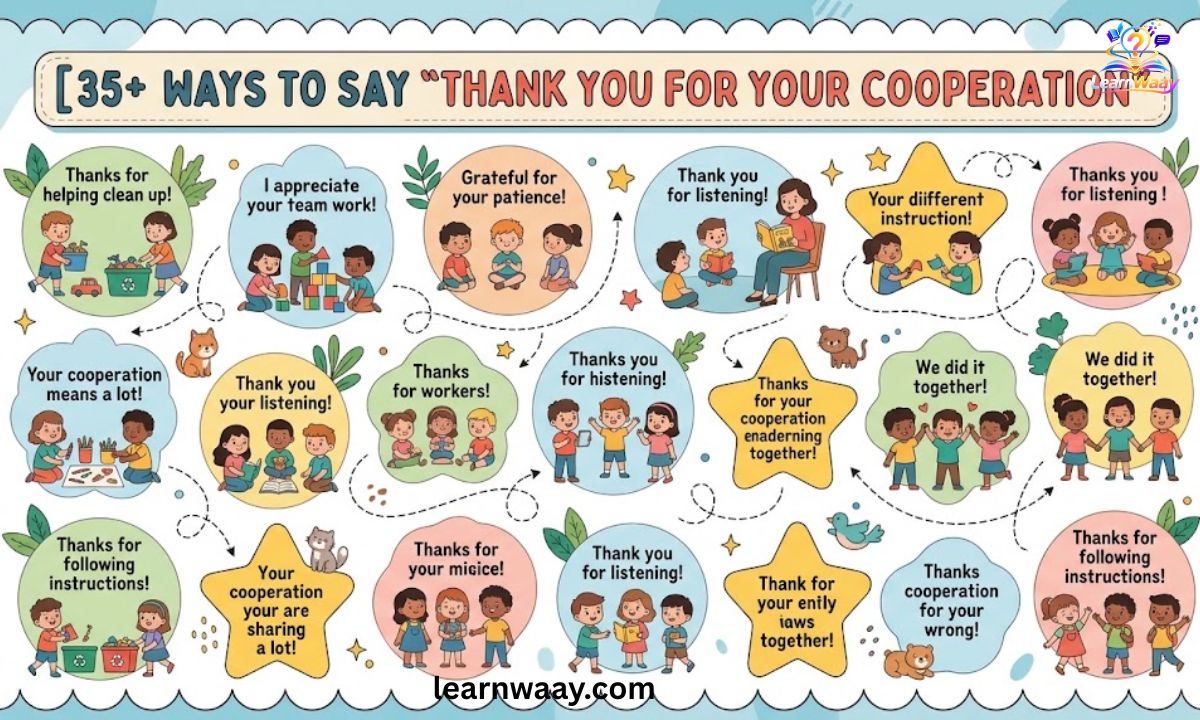

Saying “thank you for your cooperation” is one of the most common professional courtesies in business writing but repeating the same phrase in every email can start to feel stiff or impersonal.
This guide breaks down what the phrase really means, when it fits best, and gives you 35+ polished alternatives you can use to sound more genuine, specific, and professional in emails, letters, and workplace communication.
What Does “Thank You for Your Cooperation” Mean?
“Thank you for your cooperation” is a polite, professional expression used to acknowledge that someone helped, complied, or worked with you toward a shared goal. It typically implies that the other person followed instructions, responded to a request, or supported a process even if it required some extra effort on their part.
The phrase works well in formal settings because it’s respectful without being overly personal. It signals appreciation while keeping a professional distance, which makes it a safe default in business correspondence.
When to Use It
This phrase fits naturally into several common workplace situations:
- Closing a request email : after asking someone to complete a task, submit documents, or follow a new policy
- Wrapping up a project : thanking team members or clients for their involvement
- Following up after a resolved issue : acknowledging patience during a delay or complaint
- Sending reminders or notices : especially when compliance is expected, such as deadline reminders or policy updates
- Customer service communication : thanking a customer for providing information or waiting during a process
It’s less suitable for casual conversations with close colleagues, where a simpler “thanks for helping out” often feels more natural.
35+ Professional Ways to Say “Thank You for Your Cooperation”
Below are more than 35 alternatives, grouped by tone, so you can pick the phrase that best matches your message and audience.
Highly Professional and Formal Alternatives
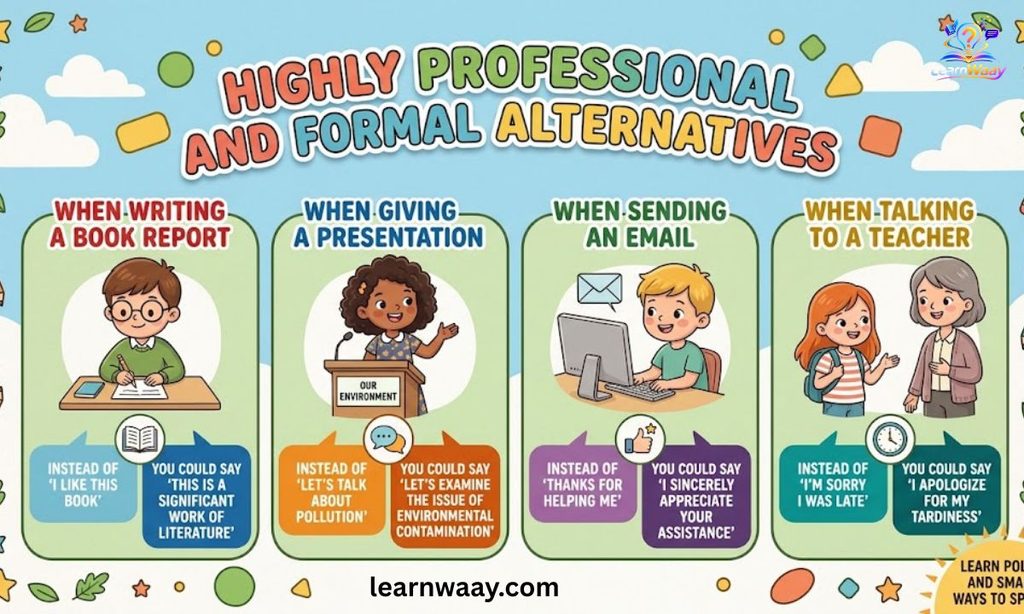
1. Thank you for your assistance in this matter.
Tone: Formal and respectful
Best use: Addressing clients, senior management, or external partners when they have helped resolve a specific issue.
Example: “Thank you for your assistance in this matter. We truly value your time.”
2. Thank you for your continued cooperation.
Tone: Professional and appreciative
Best use: Ongoing projects or long-term partnerships where consistent support has been shown.
Example: “Thank you for your cooperation throughout this process.”
3. We appreciate your prompt cooperation.
Tone: Formal and time-conscious
Best use: When someone responded or acted quickly on an urgent request.
Example: “We appreciate your prompt cooperation with the required updates.”
4. Thank you for your support and collaboration.
Tone: Warm and team-oriented
Best use: Project wrap-ups or team acknowledgments.
Example: “Thank you for your support and collaboration on this project. It made a real difference.”
5. Your cooperation is greatly appreciated.

Tone: Neutral and polished
Best use: General professional emails or letters to clients and stakeholders.
Example: “Your cooperation is greatly appreciated as we move forward.”
6. Thank you for working with us on this.
Tone: Conversational yet professional
Best use: Collaborative tasks between teams or departments.
Example: “Thank you for working with us on this. Your input was valuable.”
7. Thank you for your timely response and cooperation.
Tone: Formal and deadline-aware
Best use: When someone responded within a tight timeframe.
Example: “Thank you for your timely response and cooperation on this matter.”
8. We value your cooperation and understanding.
Tone: Empathetic and professional
Best use: Situations where patience or flexibility was required.
Example: “We value your cooperation and understanding during this transition.”
9. Thank you for your cooperation and attention to detail.
Tone: Formal and specific
Best use: When precision or thoroughness was key to the outcome.
Example: “Thank you for your cooperation and attention to detail in reviewing the documents.”
10. Your collaboration is sincerely appreciated.

Tone: Genuine and formal
Best use: End-of-project acknowledgments or official letters.
Example: “Your collaboration is sincerely appreciated and has helped us achieve our goals.”
Refined, Polite and Business-Appropriate Alternatives
11. Thank you for your assistance and prompt action.
Ideal when someone acted quickly to resolve or move forward with a request.
Example: “Thank you for your assistance and prompt action on the contract review.”
12. We appreciate your willingness to work with us.
A good fit when flexibility, not just compliance, made the outcome possible.
Example: “We appreciate your willingness to work with us on the revised timeline.”
13. Thank you for your proactive cooperation.
Best used when someone took initiative before being asked.
Example: “Thank you for your proactive cooperation in flagging the issue early.”
14. Thank you for addressing this so efficiently.
Suited to situations where speed and competence stood out.
Example: “Thank you for addressing this so efficiently it saved us valuable time.”
15. Your support in this matter is appreciated.
A slightly softer, more personal alternative for one-off requests.
Example: “Your support in this matter is appreciated more than words can say.”
16. Thank you for your professional cooperation.

Works well in formal client or vendor communication.
Example: “Thank you for your professional cooperation throughout the onboarding process.”
17. We appreciate your timely participation.
Fits meetings, surveys, or feedback requests.
Example: “We appreciate your timely participation in the review session.”
18. Thank you for your collaboration and prompt responses.
A natural choice for email threads involving back-and-forth communication.
Example: “Thank you for your collaboration and prompt responses this week.”
19. Your cooperation has been extremely helpful.
A warmer, more direct way to acknowledge someone’s effort.
Example: “Your cooperation has been extremely helpful in resolving the delay.”
20. Thank you for your dedication to this process.
Best for longer projects requiring sustained effort.
Example: “Thank you for your dedication to this process from start to finish.”
Warm, Polished and People-Focused Alternatives
21. Thank you for working closely with us.
Highlights a close, hands-on working relationship.
Example: “Thank you for working closely with us on this launch.”
22. We appreciate your flexibility and cooperation.
Ideal when plans changed and someone adapted without complaint.
Example: “We appreciate your flexibility and cooperation given the short notice.”
23. Thank you for taking the time to coordinate this.
Acknowledges effort behind the scenes, such as scheduling or logistics.
Example: “Thank you for taking the time to coordinate this with the other departments.”
24. Thank you for your commitment to resolving this.
Recognizes ongoing effort toward a solution, not just a single action.
Example: “Thank you for your commitment to resolving this so quickly.”
25. Your cooperation has made a significant difference.

A stronger, more emphatic way to express impact.
Example: “Your cooperation has made a significant difference to the outcome.”
26. Thank you for your continued support and cooperation.
Suited for recurring interactions, such as regular clients or partners.
Example: “Thank you for your continued support and cooperation this quarter.”
27. We appreciate your careful attention to this request.
Best when accuracy or thoroughness mattered.
Example: “We appreciate your careful attention to this request during the audit.”
28. Thank you for partnering with us on this.
Frames the relationship as a genuine partnership rather than a favor. Example: “Thank you for partnering with us on this initiative.”
29. Your cooperation has been invaluable.
A strong compliment appropriate for major contributions.
Example: “Your cooperation has been invaluable to the success of this project.”
30. Thank you for your understanding and prompt cooperation.

Useful when a request may have been inconvenient.
Example: “Thank you for your understanding and prompt cooperation during the changeover.”
Additional Premium Professional Alternatives
31. Thank you for ensuring everything moves forward smoothly.
Best for logistics-heavy tasks or handoffs between teams.
Example: “Thank you for ensuring everything moves forward smoothly on your end.”
32. Your readiness to assist is genuinely appreciated.
A more personal, sincere-sounding alternative.
Example: “Your readiness to assist is genuinely appreciated by the whole team.”
33. Thank you for your cooperation and responsiveness.
Highlights both willingness and speed.
Example: “Thank you for your cooperation and responsiveness throughout this process.”
34. We appreciate your efforts and cooperation greatly.
A slightly more emphatic, formal closing line.
Example: “We appreciate your efforts and cooperation greatly during this busy period.”
35. Thank you for your support in bringing this to completion.
Fits project closures and final deliverables.
Example: “Thank you for your support in bringing this to completion on schedule.”
36. Thank you for your patient cooperation throughout this process.
Best when delays or complications tested someone’s patience.
Example: “Thank you for your patient cooperation throughout this process it did not go unnoticed.”
Is It Polite or Professional?
“Thank you for your cooperation” is both polite and professional, but it can sometimes come across as slightly formal or even a little cold especially if used before someone has actually done anything (a common mistake in customer service scripts, where it’s used almost as a preemptive instruction rather than genuine thanks).
Used correctly after someone has actually cooperated it reads as courteous and businesslike. The alternatives below help you adjust the tone up or down depending on your audience, from formal client emails to warmer internal team messages.
Quick Reference Table
| Phrase | Tone | Best Used For |
| Thank you for your assistance in this matter | Formal | Resolving a specific issue |
| Thank you for your continued cooperation | Professional | Ongoing partnerships |
| We appreciate your prompt cooperation | Formal, urgent | Quick responses |
| Thank you for your support and collaboration | Warm | Team acknowledgments |
| Your cooperation is greatly appreciated | Neutral | General correspondence |
| Thank you for working with us on this | Conversational | Cross-team collaboration |
| We appreciate your flexibility and cooperation | Warm | Last-minute changes |
| Thank you for your patient cooperation | Empathetic | Delays or complications |
| Your cooperation has been invaluable | Emphatic | Major contributions |
| Thank you for partnering with us on this | Relational | Long-term partnerships |
Frequently Asked Questions
Is “thank you for your cooperation” grammatically correct?
Yes, it is grammatically correct and widely used in formal and business English.
Is it rude to say “thank you for your cooperation”?
No, but using it before someone has actually cooperated can sound presumptuous or scripted rather than sincere.
What can I say instead of “thank you for your cooperation” in an email?
Alternatives like “we appreciate your prompt response” or “thank you for your support in this matter” work well depending on context.
Can I use this phrase with clients?
Yes, it’s appropriate for client communication, especially in formal or semi-formal emails and letters.
Conclusion
Swapping out “thank you for your cooperation” for one of these alternatives helps your emails and letters feel more thoughtful, specific, and human without losing professionalism.
The right phrase depends on your relationship with the reader, the formality of the situation, and what exactly they did to earn the thanks. Keep a few of these on hand, and your professional communication will feel less repetitive and more genuinely appreciative.

Ethan is an experienced blogger with 4 years of expertise in creating engaging, informative, and reader-focused content. He is currently working with Learnwaay.com, where he shares valuable insights and helps readers discover useful information through well-researched and engaging blog content.
