
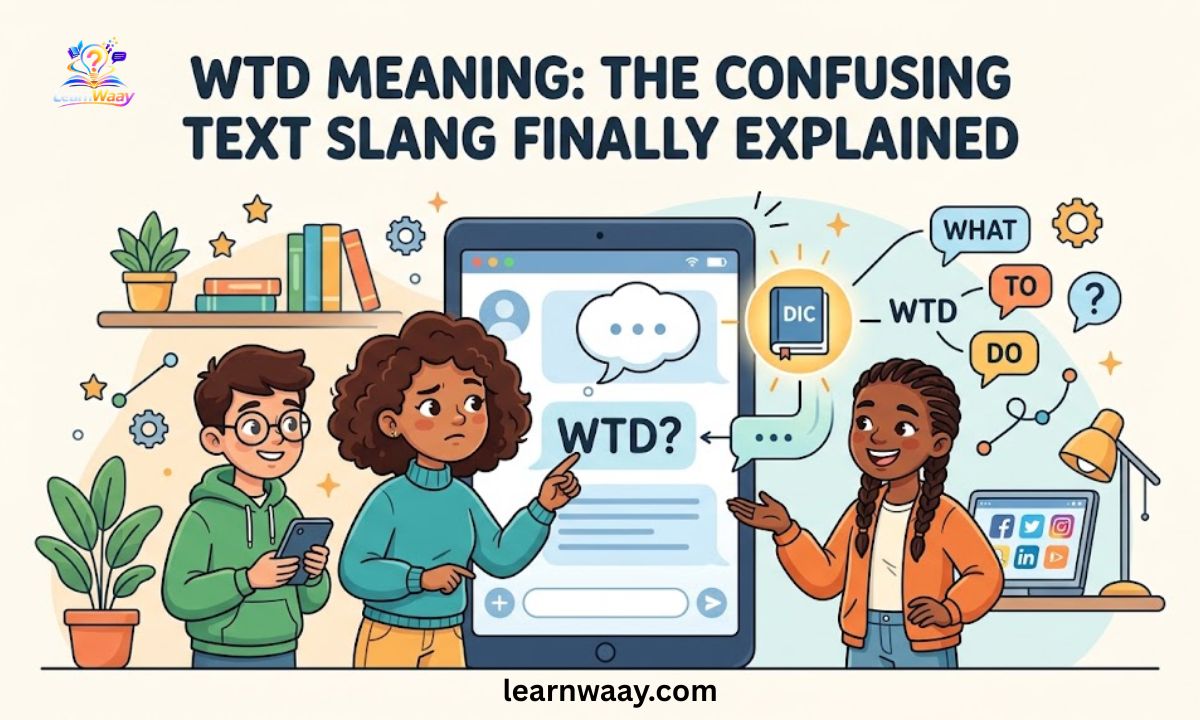

You send a text, you get back three letters WTD and suddenly you’re the one confused. No emoji, no explanation, just a question mark hanging there like it’s obvious.Here’s the thing: WTD meaning actually shifts depending on who’s texting you and why.
Sometimes it’s a bored friend fishing for plans, sometimes it’s someone genuinely thrown by a weird situation, and sometimes it’s got nothing to do with texting at all. Once you know what to look for, you’ll never have to guess again.
What is WTD Meaning
WTD is a texting abbreviation that most commonly stands for “What To Do.” People use it when they feel bored, stuck, or unsure how to handle a situation, and they want a friend’s input.A second, slightly less common meaning is “What’s The Deal,” which people use when something confusing or unexpected just happened and they want an explanation.
Outside of casual texting, WTD also has established meanings in business and finance, where it stands for things like “Week-To-Date” or “Whole Time Director.” Context is really the only reliable way to know which version someone means, since the same three letters cover very different situations.
| Meaning | Common Setting | Typical Tone |
| What To Do | Texting friends, Snapchat, group chats | Bored, casual, seeking suggestions |
| What’s The Deal | Texting, social media | Confused, mildly annoyed |
| Week-To-Date | Finance, business reports | Formal, data-focused |
| Whole Time Director | Corporate documents, company filings | Formal, legal |
You Saw It and Got Lost

It’s a normal reaction. WTD doesn’t come with a built-in explanation, and it changes meaning depending on tone. Someone might send it right after telling you their plans fell through, or right after describing something that made no sense to them. Without that surrounding context, the abbreviation on its own is genuinely ambiguous and that’s exactly why so many people stop mid-conversation to look it up.
The good news is that once you understand the two dominant everyday meanings, spotting which one applies becomes much easier.
The Bored Version: “What To Do”
This is the most frequent use of WTD in casual texting. Someone types it when they’re free, restless, or facing a dull afternoon, and they’re hoping a friend will suggest something to fill the time.
Examples:
- “Nothing’s open today. WTD?”
- “Plans got cancelled. WTD tonight?”
- “So bored rn. WTD lol”
In this version, WTD works almost like an open invitation. The person isn’t necessarily upset they’re just looking for ideas, company, or a distraction.
The Confused Version: “What’s The Deal”
The second common meaning shows up when something unexpected or frustrating happens and the person wants clarification. It’s short for asking, essentially, “what’s going on with this?”
Examples:
- “My package says delivered but it’s not here. WTD?”
- “He texted back after three weeks. WTD?”
- “The meeting got moved again. WTD.”
This version tends to carry a bit more edge than the bored version. It can signal mild frustration, confusion, or genuine curiosity about a situation that doesn’t make sense.
How This Plays Out in Real Texts
Because WTD swings between two very different tones, reading the message right before it usually tells you everything you need to know.
| What Came Before | Likely Meaning | Reasonable Reply |
| “I’m free all weekend” | What To Do | Suggest an activity or plan |
| “This app keeps crashing” | What’s The Deal | Offer a possible reason or fix |
| “She hasn’t answered in hours” | What’s The Deal | Reassure or speculate together |
| “Nothing to watch tonight” | What To Do | Recommend a show or activity |
If the sentence before WTD describes boredom or free time, it’s almost always the “What To Do” version. If it describes a problem, delay, or something odd, it’s usually “What’s The Deal.”
When the Vibe Shifts
Tone in texting is easy to misread, and WTD is especially vulnerable to this. The exact same three letters can land as playful curiosity or as passive-aggressive irritation, depending on what’s happening emotionally in the conversation.
A few signs the vibe has shifted toward frustration:
- The message has no punctuation or emoji, just “WTD.”
- It follows a complaint rather than a casual update.
- The person has already sent several messages without a reply.
When the tone turns serious, it’s usually better to respond with a full sentence rather than more slang, since abbreviations can come across as dismissive exactly when someone wants to feel heard.
Times to Absolutely Skip It
WTD works well in casual, low-stakes texting, but there are situations where it’s better left out entirely.
- Serious or emotional conversations. If someone shares something heavy a breakup, a loss, a stressful problem replying with “WTD?” can feel dismissive rather than supportive.
- Professional messages. Sending “WTD regarding the report?” to a manager or client reads as unpolished, even if your workplace communicates informally elsewhere.
- First-time conversations. With someone new, abbreviations can be misread since they don’t yet know your texting style.
- Public or formal writing. Anything meant for a wider audience emails, official posts, documentation should use full words.
As a general rule, save WTD for people who already understand your texting habits and the tone you intend.
Say It Different Ways
If you want to express the same idea without relying on the abbreviation, several natural alternatives work well in casual texting.
| Instead of WTD | Try Saying |
| What To Do | “Any ideas what we should do?” |
| What To Do | “So bored, what’s the plan?” |
| What’s The Deal | “Wait, what’s going on with this?” |
| What’s The Deal | “What happened here?” |
These full versions carry the same casual tone but leave less room for misinterpretation, which is especially useful with people who aren’t familiar with texting shorthand.
Real Messages People Actually Send
Seeing WTD inside full exchanges makes the meaning click faster than any definition alone.
- Friend A: “My car broke down on the highway.” Friend B: “Oh no. WTD now?”
- Person A: “Everyone cancelled tonight’s plans.” Person B: “That sucks. WTD?”
- Student: “I forgot to submit my assignment.” Friend: “Ouch. WTD?”
- User: “My account got locked.” Friend: “WTD? Contact support first.”
- “My laptop crashed before my presentation. WTD?”
- “I’m hungry but don’t know what to eat. WTD?”
Notice that in each case, WTD follows a problem or a stretch of free time the two situations where this abbreviation shows up most naturally.
The Work World Version

Outside of casual chat, WTD has two completely unrelated meanings that show up in professional and corporate settings. Neither has anything to do with texting slang, and mixing them up can cause real confusion in a work conversation.
Week-To-Date in Finance
In finance and business reporting, WTD stands for Week-To-Date. It refers to the cumulative total of a figure sales, revenue, expenses, website traffic, and so on — from the start of the current week up through today.
For example, a sales dashboard might show “WTD Revenue: $42,000,” meaning that’s the total revenue collected so far this week, not the whole month or year. It’s used alongside similar terms like MTD (Month-To-Date) and YTD (Year-To-Date) to track performance over different time windows.
Whole Time Director in Companies
In corporate and legal contexts, particularly under company law frameworks like India’s Companies Act, WTD stands for Whole Time Director. A Whole Time Director is a director who works full-time for the company in an executive capacity and doesn’t take on outside employment or business commitments during their term.
Whole Time Directors are typically appointed by the board, hold day-to-day management responsibility, and are classified as executive directors under company law. This meaning appears in board resolutions, company filings, and official documents a very different world from casual texting.
Where You’ll See It Most
WTD shows up across a wide range of platforms, though the exact flavor can shift slightly depending on where you encounter it.
| Platform | Common Meaning | Notes |
| Snapchat | What To Do | Often paired with a bored or playful selfie |
| Text messages | Either version | Depends entirely on the message before it |
| Group chats | What To Do | Used to gauge group interest in plans |
| Discord/gaming chats | What To Do | Asking what to play or do next |
| Business reports/dashboards | Week-To-Date | Strictly a data/finance term |
| Corporate filings | Whole Time Director | Formal legal usage |
Why People Get It Wrong
Misreadings of WTD usually come down to a handful of predictable mistakes:
- Assuming there’s only one meaning. Because casual texting and business contexts both use the same three letters, people sometimes bring the wrong version into a conversation entirely.
- Missing tone cues. Text strips out vocal tone, so a genuinely curious “WTD?” can be misread as annoyed, or vice versa.
- Ignoring the message before it. The abbreviation rarely makes sense in isolation the previous sentence almost always sets up which meaning applies.
- Using it in the wrong setting. Bringing casual slang into a professional message, or vice versa, creates confusion about what’s actually being asked.
Once you know to check the surrounding context and the setting you’re in, WTD becomes far easier to interpret correctly.
Frequently Asked Questions
What does WTD mean in a text message?
It most commonly means “What To Do,” used when someone is bored or unsure what to do next, though it can also mean “What’s The Deal” depending on context.
Is WTD rude to send?
No, WTD is generally neutral slang. It can come across as dismissive only if it follows a serious or emotional message.
What does WTD mean on Snapchat?
On Snapchat, WTD almost always means “What To Do,” typically sent when someone is bored and looking for suggestions.
What does WTD mean in business or finance?
In business contexts, WTD stands for “Week-To-Date,” referring to cumulative totals from the start of the current week.
What does WTD mean in a company or corporate document?
In corporate and legal contexts, WTD stands for “Whole Time Director,” a full-time executive director appointed by a company’s board.
Should I use WTD with my boss or in professional emails?
It’s best to avoid it. Spelling out the full question sounds more polished and avoids any risk of seeming unprofessional.
Conclusion
At the end of the day, WTD meaning really comes down to one thing context. Read the message before it, notice the tone, and you’ll almost always land on the right interpretation without overthinking it. What felt like a confusing riddle a few minutes ago is now just casual shorthand.
So next time WTD lands in your inbox, you won’t freeze up wondering what to say back. You’ll know whether someone wants plans, answers, or just a little reassurance. That’s really all WTD meaning ever boils down to.

Ethan is an experienced blogger with 4 years of expertise in creating engaging, informative, and reader-focused content. He is currently working with Learnwaay.com, where he shares valuable insights and helps readers discover useful information through well-researched and engaging blog content.
